
LED Medical Examination Lights: The Specs That Matter
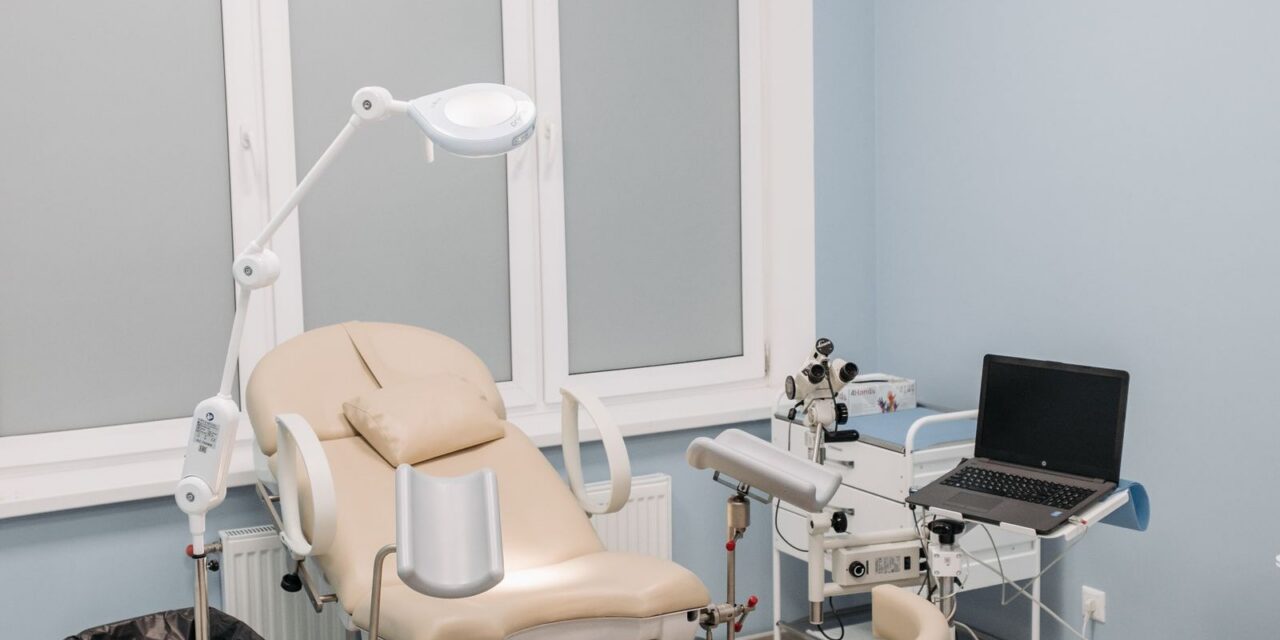
LED medical examination lights look like a simple purchase until the tender arrives and the specification sheet turns into a column of numbers nobody defined. Lux figures quoted at different distances, colour rendering indices with and without the red channel, LED life claims measured under conditions no clinic will reproduce. The good news is that the list of specifications that genuinely change clinical work is short, and once you know it, brochure comparison becomes quick. This guide walks the list, using the TMI examination light range we supply as the worked example.
Key takeaways
- Compare illuminance only at a stated distance. Examination lights typically deliver 15,000 to 40,000 lux at one metre; the TMI range runs from 25,000 to 55,000 lux.
- Colour rendering decides whether tissue looks like tissue. Ra 90 is the preferred target for clinical colour judgement, and the TMI lights are rated 93 Ra.
- Colour temperature around 4000 to 5000 K keeps the field natural; dual white/yellow arrays let the department adjust.
- LED life claims need context: ask what the figure means, and what service and modules are available locally.
- Mounting, handle hygiene and backup matter as much as optics: mobile or wall-mounted, a sterilizable handle, and battery backup where supply is unreliable.
Examination, procedure or theatre: name the task first
The market labels are useful starting points, but the task decides the light. Examination lights serve routine assessment: inspecting a wound, suturing in a casualty bay, catheterisation, gynaecological and ENT work. Minor procedure lights push more output for longer procedures in a treatment room. Theatre lights are a different class entirely, engineered for shadow control and deep cavity illumination in an operating room.
The labelling has shifted under the standards. The current edition of IEC 60601-2-41, published in 2021, covers the basic safety and essential performance of surgical luminaires and luminaires for diagnosis, and removed the older minor/major surgical luminaire terminology. Practical reading: specify the clinical task and the performance you need, and require the conformity documentation for the exact model rather than relying on its category name.
Illuminance, and the distance trap
Lux is meaningless without the distance it was measured at, because illuminance falls steeply as you move away from the source. A light quoted at 40,000 lux and one quoted at 65,000 lux may be the same brightness if one figure is at one metre and the other at half a metre. Always compare lux at a stated working distance, and ask for the field size at that distance, since a bright spot the size of a coin is not illumination.
The TMI mobile and wall-mounted examination lights illustrate the spread within one family, all rated at plus or minus 10%:
- TMI MB-07: 25,000 lux with a 100 mm light field, 7 LEDs, colour temperature 4800 K. The compact option for consulting rooms.
- TMI EL-C: 40,000 lux with an adjustable 12 to 30 cm field, 14 LEDs, 4500 K.
- TMI EL-HEX: 45,000 lux, 4000 to 5000 K, hexagonal LED array for shadow management.
- TMI EL-NOVA: 55,000 lux from a 121-LED array, 4000 to 5000 K, for departments that want procedure-grade headroom from an examination light.
Colour rendering and colour temperature
Clinicians read tissue colour: erythema, jaundice, cyanosis, perfusion, bleeding points. A light with poor colour rendering distorts exactly that judgement. The general colour rendering index (Ra) is the headline number, and Ra 90 or above is the preferred target for diagnostic work. Where tissue colour matters most, ask for R9 as well, which measures saturated red rendering separately and is the channel cheap LED arrays most often underdeliver.
The TMI range is rated 93 Ra across all four models, which sits above that target. On colour temperature, 4000 to 5000 K is the typical window for examination lighting: enough blue content to keep tissue contrast crisp without the glare of a much colder source. The TMI lights sit in that window, and their dual white and yellow LED arrays let a department shift between a cooler white and a warmer field depending on the task, with white-only available as an option.
Heat, life and running cost
Two advantages over halogen deserve their place on a cost justification. First, heat: halogen lamps throw substantial radiant heat into the field, which dries tissue during longer procedures and heats the staff. LED sources, properly heatsinked, cut that dramatically; the TMI lights use what the manufacturer describes as European thermal design to vent heat away from staff and patients. Second, life: halogen lamps run 1,000 to 3,000 hours and get replaced mid-service, while the TMI arrays are rated beyond 50,000 hours.
Read that 50,000 hours with two questions attached. What does the figure mean, typically to a defined lumen-maintenance point rather than to total failure? And what service support exists in South Africa for the driver electronics and modules? A light that lasts a decade on paper but waits eight weeks for a driver board is a false economy, which is where buying from a supplier with a national service division rather than a catalogue importer changes the arithmetic.
Mounting, hygiene and backup
Match mounting to the room. Mobile lights on castors move between bays and can be shared; wall-mounted lights keep the floor clear in tight consulting rooms and always return to the same position; ceiling-mounted arms suit rooms where the floor stays busy. Check the arm’s reach and that the head holds position without drift, since a light that slowly sinks mid-procedure is a hygiene and safety problem at once.
On hygiene, one specification separates medical lights from converted commercial ones: a sterilizable handle. TMI lights carry a high-quality sterilizable handle that takes an autoclave cycle between cases, so the point staff touch most can be processed properly. The bodies are fire-resistant polymer, and the heads are enclosed for routine wipe-down.
Finally, backup. Battery backup is not universal and is usually optional, so confirm whether it is offered, how long it runs at the intensities you use, and how it recharges. In regions where supply interruptions are routine, a light that keeps working through an outage earns its premium in the first week of winter.
The full range, including TMI mobile examination LED lights, TMI wall-mounted examination lights and the theatre and mobile units that surround them, sits in our LED medical lights category. Specifying lights for a clinic or ward upgrade? Request a quote. A sales consultant replies within one business day, with the specification sheets and lead times for the models you need.
Cover photo: Pavel Danilyuk on Pexels.
Frequently asked questions
How bright should an LED examination light be?
Examination lights typically deliver 15,000 to 40,000 lux at one metre, with procedure-oriented models going higher. The TMI range runs from 25,000 lux (MB-07) to 55,000 lux (EL-NOVA). Always compare lux at a stated distance and check the field size at that distance.
What colour rendering index do medical examination lights need?
Ra 90 or above is the preferred target for clinical colour judgement, and R9 (saturated red rendering) is worth requesting where tissue colour matters. The TMI examination lights are rated 93 Ra.
What colour temperature is best for examination lighting?
Around 4000 to 5000 K is typical: crisp enough for tissue contrast without excessive glare. The TMI range sits in that window and offers dual white and yellow LED arrays so the field can be adjusted.
How long do LED examination lights last?
The TMI arrays are rated beyond 50,000 hours, against 1,000 to 3,000 hours for halogen. Ask what the life figure is defined against, and what driver and module service support exists locally.
Do examination lights need a sterilizable handle?
For any light used across procedures, yes. TMI lights carry a sterilizable handle that takes an autoclave cycle between cases, so the touch point is properly reprocessed rather than only wiped down.