
Washer-disinfectors or manual cleaning: what CSSD standards require
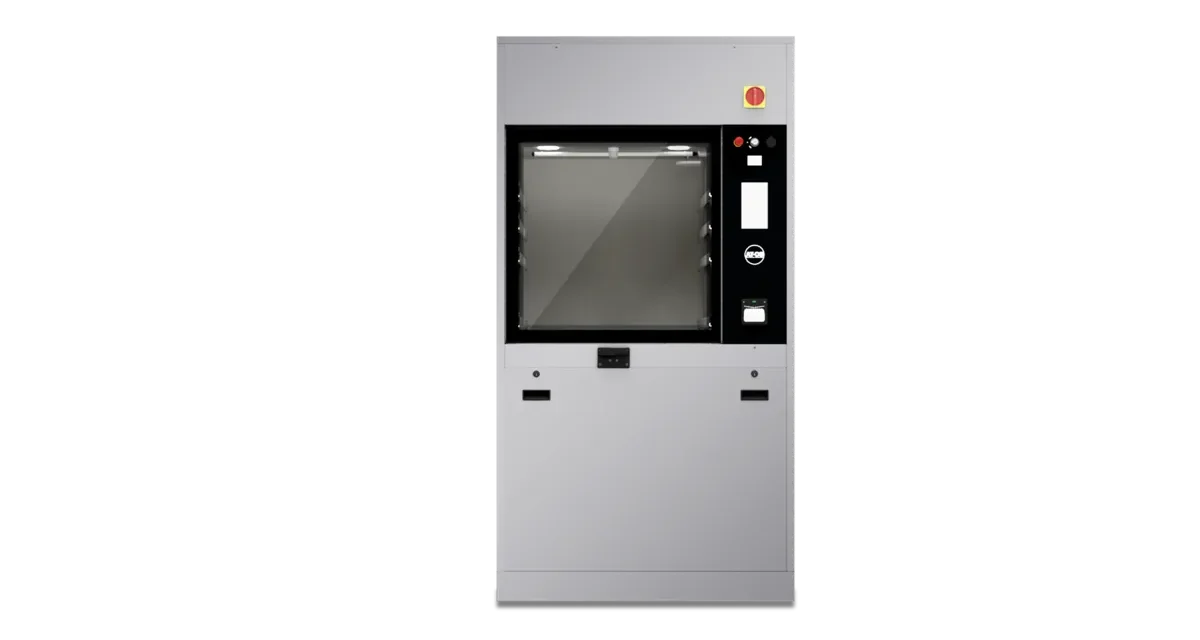
Every sterile services department eventually argues about hand washing versus the machine. The argument usually ends the same way: a washer-disinfector runs the same detergent concentration, temperature and time on every load and writes down what it did, while manual cleaning produces a different result depending on who is at the sink, how tired they are, and how much detail they remember at the end of a shift. Standards for instrument reprocessing have moved firmly toward the machine, and the reasons are practical rather than fashionable.
What the standards expect
EN ISO 15883, adopted as SANS ISO 15883, sets the performance requirements for washer-disinfectors: cleaning effectiveness, thermal disinfection with a stated A0 value, rinsing, and cycle documentation. The standard assumes the reprocessing cycle is verified. Where regulations or a facility’s own quality system require validated, repeatable cleaning, a machine with recorded cycles is the straightforward way to meet that bar.
Manual cleaning is not banned. It remains legitimate for immediate point-of-use care, for items a machine cannot handle, and in low-volume settings where a washer-disinfector is not viable. What the standards resist is hand cleaning as an unrecorded default for routine instrument sets.
Where manual cleaning breaks down
Ask three questions about any manual cleaning protocol and the weaknesses show up: what detergent was mixed to what concentration, what temperature did the rinse water reach, and how long was the scrubbing step? Manual protocols answer all three on paper. In practice, soil left in a box joint or a lumened channel survives the wash step, and the autoclave that follows bakes it on. Bioburden that survives cleaning also survives sterilization inside a protective layer.
There is a second cost: exposure. Technicians handling soiled instruments all day take needle-stick and splash risks that automation removes from the equation entirely. An ultrasonic pre-cleaner reduces the same risk further for complex items; we look at where that fits in ultrasonic cleaners before sterilization.
What a washer-disinfector cycle delivers
- Washing at a controlled temperature and time with dosed detergent, followed by rinsing with purified water.
- Thermal disinfection to a defined A0 value, measured by a probe and recorded per load.
- Drying of instruments with filtered air so packs are assembled on dry items.
- A printout or data log per cycle, which is what an auditor asks to see.
- Consistency across shifts, staff and weekends, because the program rather than the operator sets the outcome.
Choosing between them for your department
Volume settles the decision. A department processing several trays a day, any volume of lumen instruments, or anything used on multiple patients needs a machine: the cycle documentation alone justifies it. A small practice with a few simple instruments may legitimately stay manual, provided point-of-use scraping happens promptly and every step is logged.
Between those extremes sits the bedpan and sluice workload, which has its own equipment category; see bedpan washers in modern healthcare for that side of the room. The washer-disinfector range runs from compact benchtop units through pass-through machines for larger departments, and the fit depends on your tray count and layout. Describe your daily load on a quote request and we will size it. The zone-by-zone workflow that surrounds the machine is covered in CSSD workflow: zone by zone.
Frequently asked questions
Does SANS ISO 15883 rule out manual cleaning?
No. Manual cleaning remains legitimate for immediate point-of-use care, for items a machine cannot handle, and in low-volume settings where a washer-disinfector is not viable. What the standard sets is the performance a washer-disinfector has to meet: cleaning effectiveness, thermal disinfection with a stated A0 value, rinsing, and cycle documentation.
Where does manual cleaning break down?
Consistency and records. Ask what detergent was mixed to what concentration, what temperature the rinse water reached, and how long was spent on each item, and the weak points in any manual protocol show up quickly. Staff handling soiled instruments all day also carry needle-stick and splash risks that a machine takes out of the equation.
When does a department need a washer-disinfector?
Volume settles it. A department processing several trays a day, any volume of lumen instruments, or anything used on multiple patients needs a machine, and the cycle documentation alone is usually the deciding argument.