
Pass-Through Autoclaves: The Double-Door Barrier, Explained
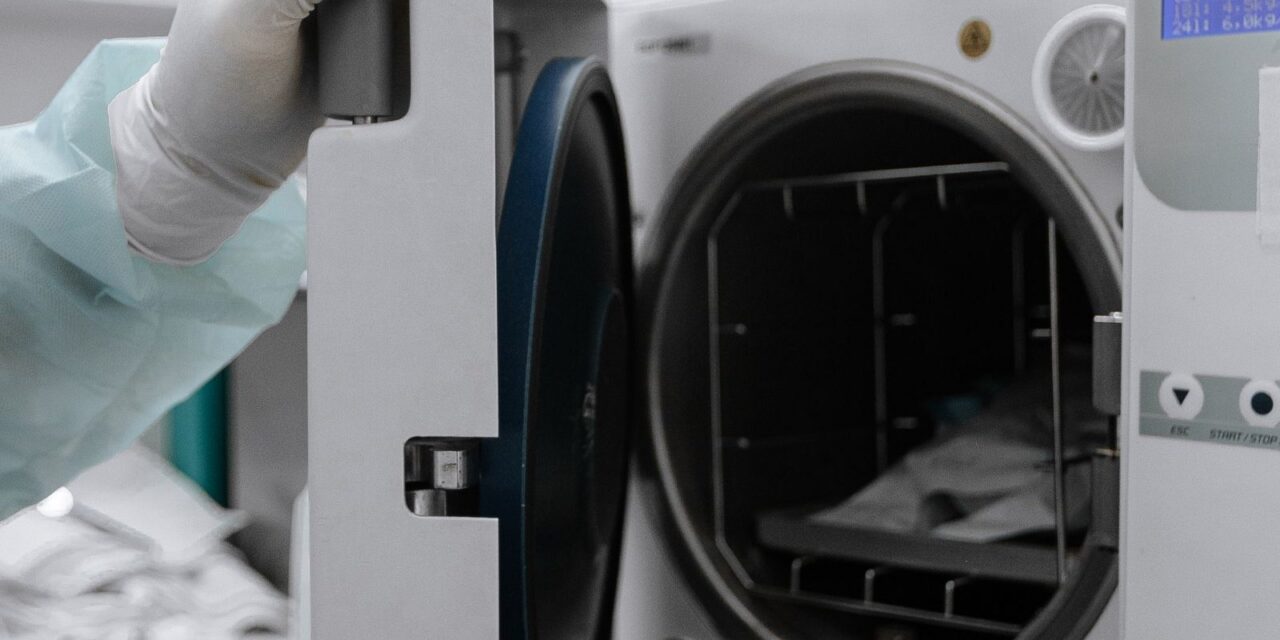
A pass-through autoclave is a steam sterilizer with a door on each side. It is installed in the wall between two rooms of a sterile services department, so a load goes in through one door and comes out through the other, already sterile. The machine does two jobs at once: it sterilizes the instruments, and it acts as the physical barrier between the clean side and the sterile side. The same unit is also called a double-door autoclave or a barrier sterilizer, and it is the piece of equipment that makes a one-way CSSD floor plan real rather than aspirational. Spelling varies by catalogue: pass through autoclave, double door autoclave, barrier sterilizer. One machine, three names.
Key takeaways
- A pass-through autoclave has two doors and sits in the wall between the clean preparation zone and the sterile zone, so loads cross the barrier inside the chamber instead of through a doorway.
- Interlock logic stops both doors opening at once, and the sterile-side door stays shut until the cycle has finished and the chamber is safe to open.
- The sterilization itself is ordinary steam practice: 134 degree pack, Bowie-Dick and flash cycles, deep vacuum air removal and a drying phase.
- Site services decide the install: a wall opening or free-standing cabinet, a 380 V supply, clean water for the vacuum system and generator, and a metal floor drain.
- Our RDS Series pass-through autoclaves run from 160 to 1200 litres, with an integrated 18 kW steam generator or hospital steam, and they meter their own water and electricity per cycle.
Why the second door exists
A sterile services department runs on one rule: soiled items never cross paths with sterile ones. Departments are zoned for it, with a soiled receiving side, a washing and packing side, and a sterile storage side, and staff discipline keeps the flow in one direction. A zone-by-zone CSSD can still lose that discipline at every door, because a door has to open for a trolley to pass.
Building the sterilizer into the wall removes that weak point. Items are loaded on the clean side. The cycle runs. The load is unloaded on the sterile side, straight into sterile storage. At no point does a sterile pack travel back through the packing area or sit in a doorway while someone holds it open. The machine is the barrier, which means cross-contamination becomes a mechanical impossibility instead of a procedural promise.
How the interlock protects the barrier
The two doors are controlled, not manual. Interlock logic prevents both doors being open at the same time, and the door on the sterile side cannot be opened until the cycle has completed and the chamber has returned to safe pressure and temperature. Until that release, the barrier holds even if someone tries to force the workflow.
Good practice also puts an air-leak test into the routine, because a chamber that will not hold vacuum cannot be trusted to keep the load dry or the zone sealed. The RDS Series carries an air-leak test programme alongside its production cycles for exactly that reason. Interlock and door behaviour are the two things to confirm in a tender specification, since they define whether the machine actually delivers the barrier the floor plan depends on.
What runs inside is standard steam sterilization
Behind the second door, the science is familiar. The RDS Series runs pack cycles at 134 degrees, a Bowie-Dick cycle for air-removal testing, a flash cycle for urgent loads, and additional programmes to suit the department’s own load mix. Air is removed by a high-efficiency vacuum system that reaches better than minus 90 kPa, which is what drives steam into wrapped loads and pulls moisture out again at the end, so packs come out dry and ready to store.
Cycle data matters as much as the cycle itself in a barrier installation, because loads now leave from a different room than they entered. The machines accept a connected printer or a network link to a remote PC, so the record of every cycle is stored where the sterile-side staff can see it, not only where the operator stood.
Sizing: from 160 to 1200 litres
Pass-through sterilizers are sized by the loads they have to turn, and hospital departments sit at different points on that scale. The RDS Series covers it with five chamber sizes: RDS160 and RDS200 for smaller departments and theatre suites, then RDS400, RDS600 and RDS1200 for central departments running high volumes. Every model uses Duplex LDX2101 stainless steel for the chamber, jacket and doors, and every model carries the same cycle set and control system, so a department can standardise across sizes.
It is worth being honest about one thing: a double-door machine is not automatically required. Where a department is small, or the floor plan does not allow two separate zones, a single-door autoclave sterilizer does the same sterilization work and the barrier is maintained by layout and procedure instead. The pass-through earns its place where the wall between zones already exists and the workflow justifies building the machine into it.
What the wall has to carry
Installation is where pass-through projects succeed or drag. The RDS Series installs recessed through a partition wall, or as a free-standing cabinet where wall mounting is not practical, and the wall opening has to be coordinated with the equipment supplier before the room is built. Around the machine, the services are specific:
- Steam from the integrated 18 kW stainless steel 316L generator with automatic blow-down, or from the hospital’s central steam supply.
- Electrical supply at 380 V, 3 phases plus neutral and earth, 35 A per phase.
- A 15 mm cold water line at 300 kPa for the vacuum system, and a separate 15 mm line of clean or reverse-osmosis water for the steam generator.
- A 50 mm metal floor drain.
- Loading trolleys inside and outside, so the clean side and the sterile side each have their own set.
Two details in that list repay attention later. The standby mode lets the machine drop its water and energy use automatically when it is idle between cycles, and the consumption meters are networked to the control system, so the department can read its own water and electricity per cycle instead of estimating it. That data is also the backbone of any discussion about autoclave energy consumption. The pressure vessel carries a guarantee of five years against faulty materials and workmanship.
Planning a barrier installation, or replacing a single-door machine that no longer fits the workflow? Request a quote. A sales consultant replies within one business day, and our engineers handle installation, commissioning and validation nationwide.
Cover photo: SHVETS production on Pexels.
Frequently asked questions
What is a pass-through autoclave?
A pass-through autoclave, also called a double-door or barrier sterilizer, is a steam sterilizer installed between two CSSD zones with a loading door on the clean side and an unloading door on the sterile side. Loads enter, are sterilised, and leave on the other side of the wall, so the machine acts as the physical barrier between clean and sterile areas.
Can both doors of a double-door autoclave be open at once?
No. Interlock logic prevents both doors opening simultaneously, and the sterile-side door remains locked until the cycle has finished and the chamber has returned to safe pressure and temperature.
Does a pass-through autoclave sterilize differently from a single-door one?
No. The sterilization principle is the same steam process: vacuum air removal, 134 degree cycles, then drying. The difference is the two-sided workflow and the interlock arrangement, not the science inside the chamber.
What utilities does a pass-through autoclave need?
Per the RDS Series specification: a 380 V supply at 35 A per phase, cold water at 300 kPa for the vacuum system, clean or reverse-osmosis water for the integrated steam generator, and a 50 mm metal floor drain. The unit can also run from a hospital central steam supply.
What sizes do pass-through autoclaves come in?
The RDS Series runs from 160 litres (RDS160) up to 1200 litres (RDS1200), with 200, 400 and 600 litre chambers in between, sized by the volume and size of the loads a department processes each day.